

23 Customer Service Videos Worth Your Team's Time in 2026
Key Takeaways:
- Matt Dixon's 3:14 talk on customer effort is the most useful video here, because it rests on five years of CEB research.
- Of the 23 videos with a verified upload date, 15 predate 2020, and the median year is 2018.
- Six widely recommended videos do not transfer to B2B, because each depends on a one-time gesture.
- None of the five articles ranking on page one separates B2B examples from B2C ones.
- Videos under three minutes get finished and discussed; 45-minute training films get scheduled once.
What is the best customer service video to show a B2B support team? Matt Dixon on customer effort. It is the only video here built on measured research into what drives loyalty. Everything else rests on a story that happened once at a hotel.
If the team only watches one video this quarter, make it that one. The six below all describe situations that repeat, involving customers who will still be customers next quarter.
Matt Dixon: The Effortless Customer Experience (3:14)
Dixon co-authored The Effortless Experience with Nick Toman and Rick DeLisi.
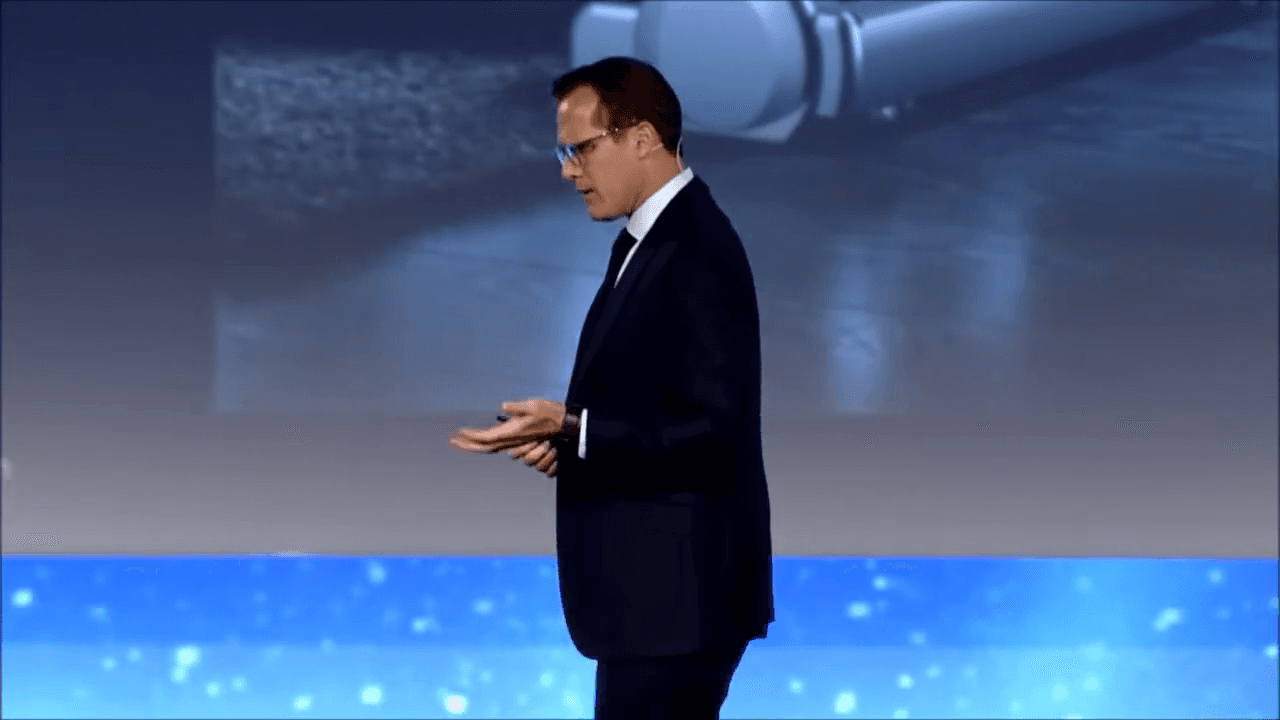
The work draws on five years of CEB research across tens of thousands of customers. Its central finding: reducing customer effort predicts loyalty far better than exceeding expectations.
Delight is expensive and inconsistent, and customers forget it within a week. High effort they remember.
That maps directly onto a B2B queue. The account has a renewal date and a procurement process. The renewal turns on whether that customer has to explain the same integration problem twice.
At 3:14 it fits a standup with time left over. That is rare for research-grade material.
Steal this: measure effort per ticket instead of satisfaction per ticket. Count reopens, handoffs, and repeated context.
Shep Hyken: When AI Works Better Than Humans in Customer Service (3:42)
Hyken has spent decades arguing that service is a revenue function rather than a cost line.
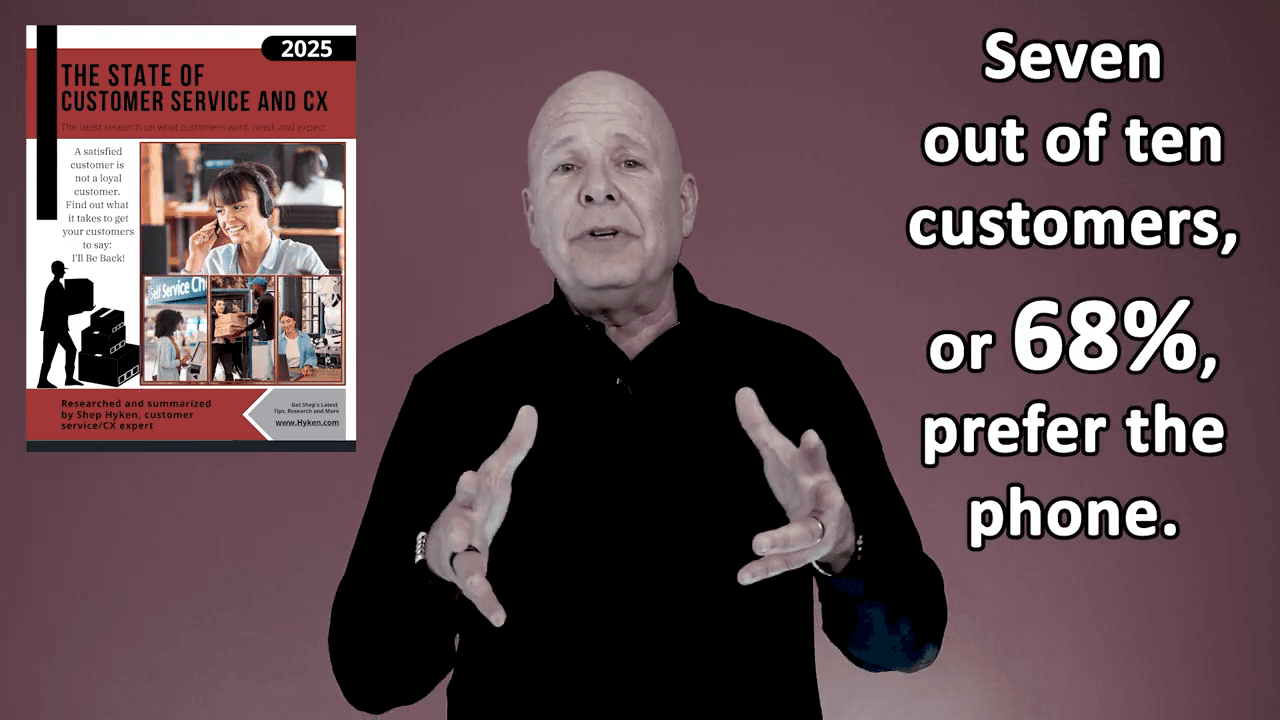
This clip went up in August 2025, making it one of the few recent entries here. It is also the only one addressing where AI belongs in the workflow.
His argument is a scoping exercise rather than a prediction. Some interactions suit a machine and some suit a human. The skill is knowing which, before the customer finds out the hard way.
Steal this: the reframe. Support that surfaces churn risk and expansion signals is a revenue function. That is the case for treating support as a profit center.
Brené Brown on Empathy (2:53)
An RSA animation with 23.8 million views. It is the clearest explanation available of why "at least it's not worse" makes people feel unheard.
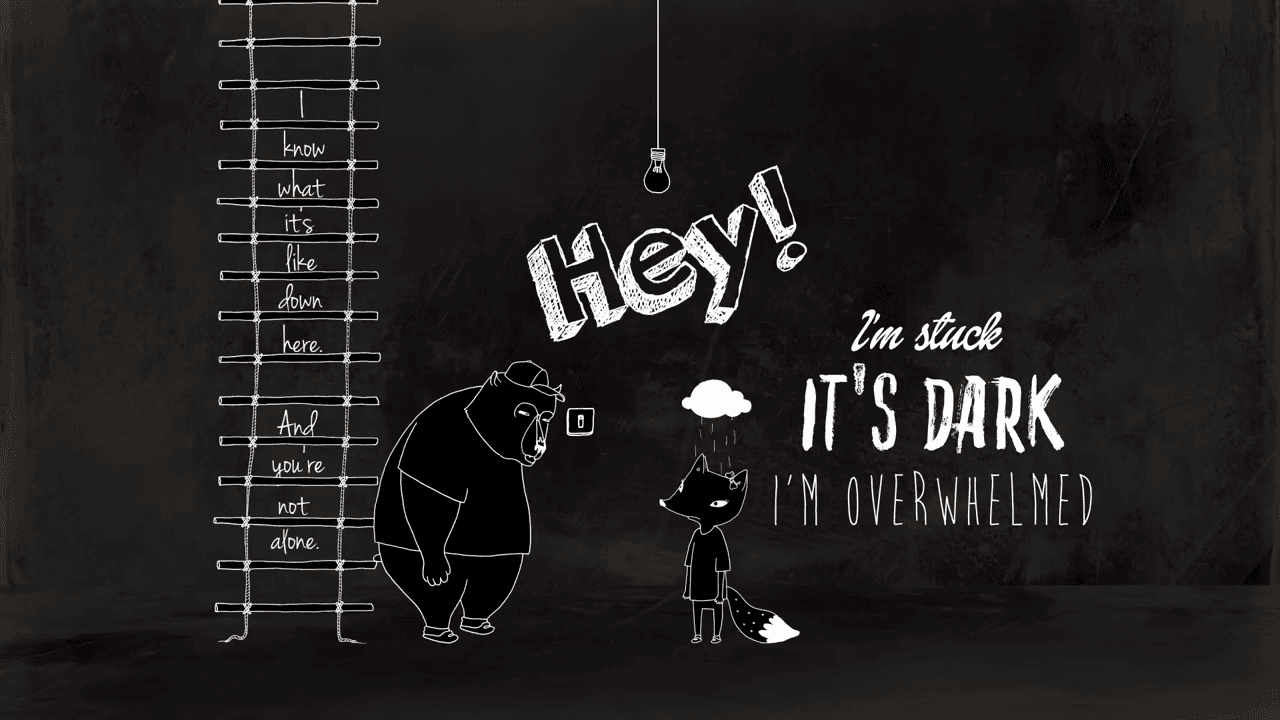
Brown's distinction is between empathy, which connects, and sympathy, which distances. Support teams reach for sympathy under pressure because it is faster. "Sorry for the frustration" costs three seconds.
Empathy costs one more sentence, proving the agent understood what actually broke. That sentence is the whole job.
Steal this: ban "sorry for any inconvenience." Replace it with one sentence restating the customer's specific problem.
Cloud English: Calming Frustrated Customers (13:33)
This appears on none of the five lists currently ranking for this keyword, which is an oversight.
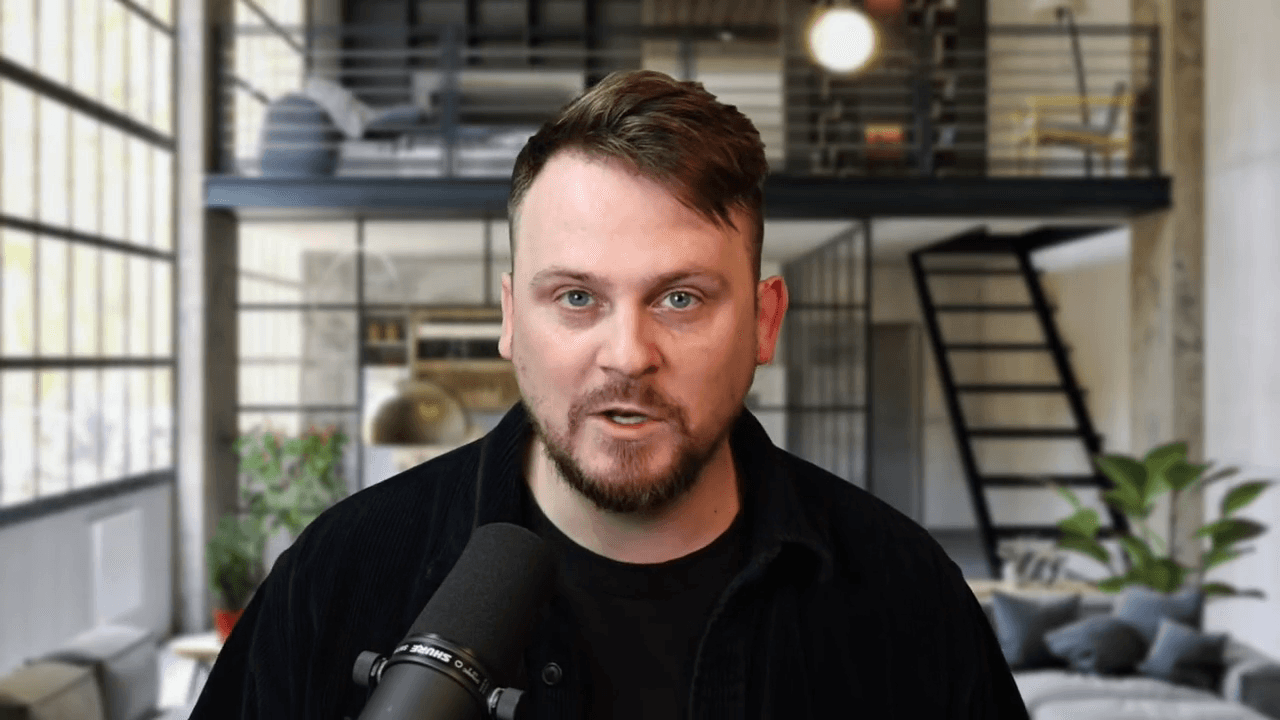
It teaches 16 specific de-escalation phrases, each with the reasoning behind it.
At 13:33 it is too long for one session. Split it across two.
Steal this: the phrase bank. Have the team write their three most-used holding sentences, then compare them against the video's.
Celeste Headlee: 10 Ways to Have a Better Conversation (11:45)
Headlee's TED talk has been watched nearly 16 million times, and it was never about customer service. That is why it survives the jump to technical support.
Her sharpest point is that most people are not listening but waiting. In support that habit is expensive. An agent who has already decided what a ticket is about misses the sentence that explains it.
Steal this: stop composing the reply while the customer is still explaining the problem.
Canity: Never Argue (1:36)
At ninety-six seconds this fits the gap before standup, not a Thursday training slot.

The mechanism is a pause before the correction. When a customer is factually wrong, being right immediately costs more than being right thirty seconds later.
Steal this: the pause, and the habit of correcting after acknowledging rather than before.
Most of these depend on the agent holding account history in their head. Software should carry that, not the rep. Helply's AI assistant drafts every reply with account context, pulling CRM, billing, and product usage into the ticket first.
Best Customer Service Training Videos for Building Skills
Every video in this section is free. That matters, because "free customer service training videos" is a common way people find this topic. These are skills-focused clips: phrasing and structure rather than philosophy.
HubSpot: 7 Essential Customer Support Skills Every Rep Needs
A clean onboarding video covering the fundamentals. It works best in week one, before a new hire touches a live queue.
The adaptation for B2B is scope. Product knowledge means something different when customers read the API docs before filing the ticket.
engVid: The L.A.S.T. Method, Listen, Apologise, Solve, Thank (10:12)
A named, four-step technique for handling complaints. Teams can practise it, and managers can spot it in a transcript.
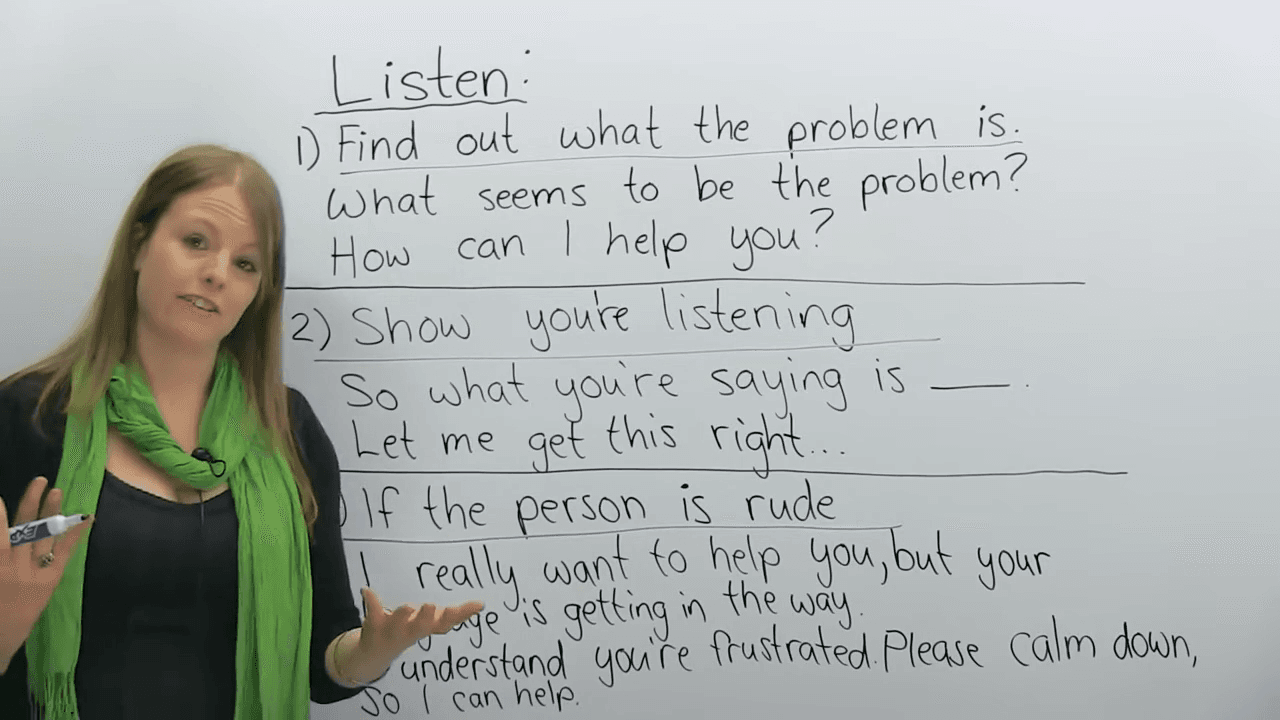
The B2B caveat is the apology step. Over-apologising to a technical customer who wants a root cause reads as evasion.
Indeed: 6 Tips For Improving Your Customer Service Skills (7:58)
Well structured and clearly presented, aimed at people early in a service career.
Useful for a first support hire. Less so for a team that has run a queue for two years.
English Phrases for Professional Customer Service
Phrasing drills for teams writing support English as a second language. Practical, specific, and easy to turn into a shared style guide.
Our guide to building customer service skills with weekly drills pairs each of these with an exercise.
Inspiring Customer Service Videos and the Case Studies Everyone Cites
Are famous customer service examples like Ritz-Carlton actually useful for software companies? Partly. They are worth watching for morale and for the vocabulary they give a team. They are not worth copying, and every other article on this topic pretends otherwise.
Look at what the canonical stories share. Ritz-Carlton staff hold discretionary spend to fix a guest's problem. A Southwest employee drives hours to return lost shoes.
Trader Joe's takes back the half-eaten jar. Each is a one-time gesture toward a customer who walked in once.
The gesture is affordable because the company retells it for years and earns back more than it spent. B2B support has the opposite shape. The same named account files tickets every week for three years.
A gesture that only works once is not a strategy. The talks in this bucket still earn their runtime:
- John Boccuzzi Jr, I Was Seduced by Exceptional Customer Service (8:21). A TEDxBryantU talk with 814,000 views. It argues that service outperforms marketing as a growth channel, which is the thesis B2B leaders need for budget conversations.
- Simon Sinek, The Secret to GREAT Customer Service (1:50). Holds the top video slot for this keyword. The distinction between being polite and actually caring is real; the example is retail.
- Blake Morgan. Strategy-level framing on where customer experience is heading. Best for a planning session rather than a training slot.
- Mark Sanborn, 4 Ways to Elevate the Customer's Experience (5:49). Motivation, delivered well. Use it when morale is the problem rather than skill.
- Jan Gunnarsson, Hostmanship. Treats welcome as a discipline with its own practices. The most transferable idea in the keynote bucket.
- Salena Scardina. Argues for human connection as service becomes automated. A useful counterweight to the AI conversation.
- Jon Picoult, The Best Service Recovery Story Ever. The recovery mechanism transfers, even though the story is consumer.
- Dennis Snow. Ex-Disney, and one of the few speakers who explains the operational design behind the famous moments.
Watch them. Just do not build a training programme on the idea that a B2B account wants to be surprised. For what does carry over, we broke down good customer service examples and the mechanism behind each.
Funny Customer Service Videos Worth Playing in a Session
Comedy earns its place under one condition. Pair every clip with a specific question about the team's own queue.
Played as filler, these teach nothing. Played as a prompt, they surface things people will not say in a retrospective.
- SNL, Customer Service (3:50). A call centre employee bonds with a caller instead of solving the problem. Question: where does rapport replace a resolution?
- Awkward Puppets, Customer Service (2:39). Five and a half million views of escalating phone hell. Question: how many steps stand between a customer and a human on our side?
- Little Britain, "Computer says no." Question: where in our product is the answer effectively "computer says no"?
- Kim's Convenience, The king of customer service (1:14). A masterclass in redirecting an interrupting customer toward a sale.
- Meet the Parents, Bad Customer Service (1:12). Rules applied without judgment. Question: which policies do we enforce because they are right, and which because they are written down?
- Love Actually, the gift-wrapping scene (2:48). Service theatre that ignores what the customer actually wants.
That "computer says no" question is the useful one. Recurring dead ends are feature requests in disguise. Helply captures them as structured feature requests weighted by account ARR, instead of letting them die in a closed ticket.
How to Run a 20-Minute Customer Service Training Session
How do you run a short training session that people do not resent? Keep it to 20 minutes, use one short video, and end with a written change. The format works because it spends more time on the team's own tickets than on the video.
- Minutes 0 to 3. Play one video under three minutes. One, not three.
- Minutes 3 to 10. Ask a single question: where does this happen in our queue?
- Minutes 10 to 17. Pull one real ticket from last week and rerun it using the video's mechanism.
- Minutes 17 to 20. Agree one change, write it down, and give it an owner.
Four things kill these sessions. A 45-minute film leaves no time to discuss it, and no question means no application.
No owner means no follow-through. Running it as compliance guarantees nobody watches the next one.
The Highest-Return Video Is One You Record Yourself
No published video will match a recording of the team's own work. An anonymised support call beats every TED talk for coaching value.
The reason is specificity. A generic clip teaches a principle. A real transcript shows the exact moment an agent missed the question underneath the question.
Pair one external video with one internal recording and the team argues about real tickets. Rotate the external clip weekly and keep the structure fixed. Consistency beats variety here.
For a broader operating baseline, start with the customer service checklist for B2B support teams.
What None of These Customer Service Videos Cover
Three situations come up constantly in B2B support. None of the 23 videos above addresses any of them.
When the Answer Is No and Will Stay No
This is the question from the introduction, still unanswered under the video that prompted it. The canonical advice is to keep searching for a solution. That is what the second commenter called out as theatre.
In B2B the theatre is worse than useless. The customer returns next Tuesday, and for the next three years. Four steps work better than a performance:
- Name the constraint. Say what is not possible and why, in one sentence.
- Give a timeline. "Not this quarter" beats "not currently" every time.
- Offer the workaround. Even an imperfect one respects the customer's problem.
- Log it as a feature request. This is what turns a no into a date.
An honest no with a date attached preserves the relationship. Give a hopeful maybe and the customer stops believing you over the following weeks.
When the Customer Knows the Product Better Than the Agent
Nothing in the standard canon covers this. Every scenario assumes the employee holds the information advantage.
In technical B2B that assumption breaks constantly. A staff engineer who has read the docs, checked the changelog, and reproduced the bug does not need reassurance.
The move is to concede the knowledge gap quickly. Then pivot to what support actually contributes: internal systems, engineering escalation, and account history. Pretending to be the expert costs credibility that is hard to earn back.
When AI Drafted the Reply First
The publication dates make this one obvious. Fifteen of the 23 videos here predate 2020, and the median upload year is 2018. Almost the entire recommended canon predates AI entering the support queue.
None covers what a human adds once a competent draft already exists. That situation did not exist when they were filmed. Shep Hyken's 2025 clip is the rare exception, and it scopes the question rather than answering it.
What a human adds is judgment. Knowing a confident draft is subtly wrong for this account. Knowing the tone is off for a customer three weeks from renewal.
Knowing the real question sits underneath the one being asked. Helply's AI drafts every reply with sources and account context. The human stays in the loop, because in B2B most tickets need one.
What Every Good Customer Service Video Is Really Teaching
Strip away the hotels and the airlines and the same six mechanisms appear:
- Reduce effort before adding delight. Effort is measurable and repeatable; delight is neither.
- Recover faster than promised. Recovery speed builds more trust than never failing, which is not available.
- Name the constraint instead of softening it. Vagueness reads as evasion to a technical customer.
- Listen to the end of the sentence. The real issue usually arrives after the first pause.
- Route the signal to whoever owns the account. A churn hint is worthless if it stays in the ticket.
- Make the fix outlive the ticket. If the answer is not written down, it gets answered again next week.
That fifth mechanism is where B2B breaks from everything the canon teaches. In consumer service the ticket ends when the customer is happy. In B2B the ticket is a reading on an account: its health, its risk, its appetite for more.
Seat-based tools were built for the first model, where volume is high and customers are anonymous. That assumption shows up in the pricing.
Helply charges $1 per ticket, with unlimited seats and unlimited AI. The bill tracks the work, not the headcount. Bringing a CSM or an AE into the conversation costs nothing.
Conclusion
The best customer service videos for a B2B team teach a mechanism that can be measured and repeated. Dixon on effort, Headlee on listening, Brown on empathy, Hyken on where AI belongs.
The hospitality stories are worth watching for morale and vocabulary. They were built for a walk-in customer, not an account with a renewal date. The most valuable part of any session is not the video anyway.
It is the seven minutes afterward spent rerunning a real ticket. The next useful video in this genre has not been made yet, because none of them covers the queue as it works now.
Helply turns every ticket into account context, revenue signals, and documentation. One price, $1 per ticket, unlimited seats and unlimited AI.
FAQ
Are there good free customer service training videos?
Yes, every video in this list is free on YouTube, including the HubSpot, Indeed, Canity, and Brené Brown clips.
How long should a customer service training video be?
Under three minutes for a team session and under ten for individual study, because longer videos become meetings.
Do funny customer service videos work for training?
They work when each clip is paired with a specific question about the team's own queue, and fail as filler.
Why don't famous customer service examples like Ritz-Carlton work for B2B?
They rely on a one-time gesture toward a walk-in customer, while B2B means serving the same account for years.
What should an agent do when the answer to a customer is no?
Name the constraint, give a timeline, offer a workaround, and log the request so the no carries a date.
What is the most useful customer service video for a support team in 2026?
Matt Dixon on reducing customer effort, because it rests on five years of CEB research rather than a single story.
Are older customer service videos still worth watching?
Yes for the fundamentals, but 15 of the 23 videos here predate 2020, so none covers AI-drafted replies.

